|
Important: this page is not about history but a view on a history.
MODERN ERA 9. WHO IS INDIGENOUS PART 2
The Israelis also try to protect and preserve their cause in another way: falsifying, mystifying and denying. It goes like this: On June 9, 2020 Netanyahu uttered the terms "invented Palestinians" and "indigenous Jews". That is a disgusting copy as it has its origin to the person of the American republican hardliner Newt Gingrich. That brings us the question: what is 'indigenous'? In non-institutionalized definition, 'indigenous' is adjective and refers to the notion of a place-based human ethnic culture that has not migrated from its homeland, and is not a settler or colonial population. Merriam Webster dictionary explains 'indigenous' as the earliest known inhabitants of a place and especially of a place that was colonized by a now-dominant group The institutionalized definition about 'indigenous' as written by the United Nations:
The basis is poor as the 6 points are completely vague and open for any interpretation. The second point is even an attempt to falsify the chronology inherent to historical continuity. Self-identification is an autonomous act but leads to inaccuracy when it comes to "Jew" and "Israeli". "Jew" adjective to a religion that sprouted as an offshoot from another belief. while "Israeli" is adjective to the results forthcoming from developments that have led to the invention in 1948. The roots is the assassination of a UN diplomat in September 1948, which in return has its roots in the invasion of the Zionist migrants in 1947, which in return is a continuation from the early 1900s. Any continuity is about the continuation of a cycle of events over an immeasurable period of time, and the recognition of events as inseparably interconnected. So it is when we speak about historical continuity. However, the cycle didn't start to run by the assassination. It was running for thousands and thousands of years. But, not every event belongs to a certain historical continuity as they may have their roots in another continuity. For instance, the migration from Eastern Europe in 1905 was not by ethnic related cycle. There was a revolution in Rusia against Tsar Nicholas II's autocratic rule, fueled by economic hardship, and poor working conditions. The revolution exploded after "Bloody Sunday" when troops fired on peaceful protesters, leading to widespread strikes, peasant revolts, and mutinies, forcing the Tsar to concede reforms like the Duma (parliament) and a constitution, though autocracy largely remained intact until 1917. The problem with this historical event is that Zionism-aligned sources are pulling the revolution out of its context by claiming that pogroms were because of the revolution, and that Jews in Russia were scapegoated and faced economic hardship, poor working conditions, while these social-economic elements struck all ordinary Russians. The economy, in particular the financial economy, was under Jewish control. A similar event was in the 1930s, when Jews in Nazi Germany were blamed for the economic crisis, while Zionism-aligned sources ignore the fact that German Jews controlled the German banking system. In 1933, German Ashkenazis struck the Havaara deal with the Nazis to have themselves migrated to what was then British Mandatory Palestine. The deal also issued the move of vast capital out of Nazi Germany. If we focus on what is biblically written, then there were two tribes who entered Canaan. The group of the first tribe are written as those freed from slavery and were led by Moses (in Islam, Musa) and Joshua (in Islam, . From a historical scientific perspective, these people appear to be the Israelites. The group led by Moses conquered the land (Naqab Desert) of the Amalekites, and from there into north where they were confronted by King David who drove them into hills of the Jebusites. The second group was led by Joshua (in Islam, Yusha bin Nun or Yusha ibn Nun), the successor to Moses Prophet Musa (Moses), conquered Canaan via the Jordan River.
So, according to our understanding, there is no proven historical continuity that relates modern-day Jews either to the Israelites and or the Hebrews, in particular the Israelites, as biblical archeologists have not found any evidence, that this tribe have wandered across the Sinai at all. There's also no historic continuity that relates the Jews with the Abrahamic tribe as Jews have no roots in Southern Mesopotamia were the Hebrew tribe came from (see map). Interesting is this: 'Hebrew' is adjective to Abraham's people as a tribe, and who are named after the language they spoke: Hebrew. This indicates that the Hebrew language is not native to Canaan but to the region were Abraham came from, Ur in today's Iraq. The language is not even Jewish because the Hebrew tribe weren't Jews by origin, as they came from Southern Mesopotamia, Iraq's current Basra region. Then this, if we connect any historic continuity to the Israelites, to whom the Israelis liken themselves with by linking them with the victory on the conquest of Jebus by King David, the question rises how did David became king of these tribe while he had his kingdom far north and away from the territory now known as the Negev Deser. A desert that was inhabit by the Amalekites. The people who entered the territory of the Amalekites from the south, by Jews described as Israelites, these people ended up in the territory of King David who drove them out into the direction of the hills of Jebus. But, the Jews still connect the Israelites with King David's seizure of Jebus, now Jerusalem as their way of documenting insinuates that the Israelites have fought with the king to seize Jebus. It's quiet illogical to document the Israelites first as driven out by King David, as we found in several referrals, then let modern-day people believe that the driven people have a link in the rebuilding of Jebus but as King David's city. And, if we translate it to modern times, those who stood at the beginning (1948-1960s), they also don't have any historical continuity that sprouted in Palestine:
So, if a Zionism-aligned person claims that Palestinians are a 'invented people,' he has invented him or herself as a Zionist. 'Israelis' have no historical continuity as they didn't emerge in Palestine. On September 24, 2020 BESA published an article in an attempt to explain its readers something that didn't exist: "Why Arabs Hate The Palestinians". The article was published amid Jarred Kushner's regional destabilizing actions to persuade Gulf states to take side with the Israelis. The headlined question was an attempt to let the English reading Arabs believe that the course for an own Palestinian state was to blame. Hasbara, which is the basis the Israelis and their supporters use in their 'communication' with the outside world, is described as a reference to public-relations efforts to disseminate positive information abroad about the Israelis and their actions, whereby dissemination is scattering or spreading widely, as though sowing seed disseminate ideas. However, it is actually a practice to deflect attention away from that what is initially the issue. In plain words: Israelis and their supporters don't want you to talk about what should or must be talked about: the essence of the matter, not whatever is achieved. It is an kind of robbing you from the right of freedom of expression by accusing you of "anti-Semitism". But, who and what is Semitic? The Spanish language was distributed via colonization that began with the Spanish Conquest of the Americas in 1519. The Spaniards not only brought their language to the continent but also their religion and culture. When the Spaniards engaged interracial relationship, they became the ancestors for all later ancestors who then became the ancestors of today's Central and South American people. That doesn't mean that today's people, who now have Spanish as their 'native language', and have their religion from the Spanish, are Spanish originated people.
The Israelis from the old generation are originated from those during the migration while the young Israeli generation have parents who are the children of the old generation who in return are the children of the migrants generation. In the 21st century, Jews in Palestine are from all corners of the world mostly via illegal crowd funding by the Jewish Agency For Israel, which presents itself as a non-government organization, a title misused as the Israelis are occupying belligerents. So, how can anyone be accused of anti-Semitism when Semitism is factual about indigenous Semitic people. These people do no longer live and that for ages. What is practiced in the 21st century, when whoever views criticism against Jews in Europe as anti-Semitism, it is ripping Semitism completely out of its historical context.
|

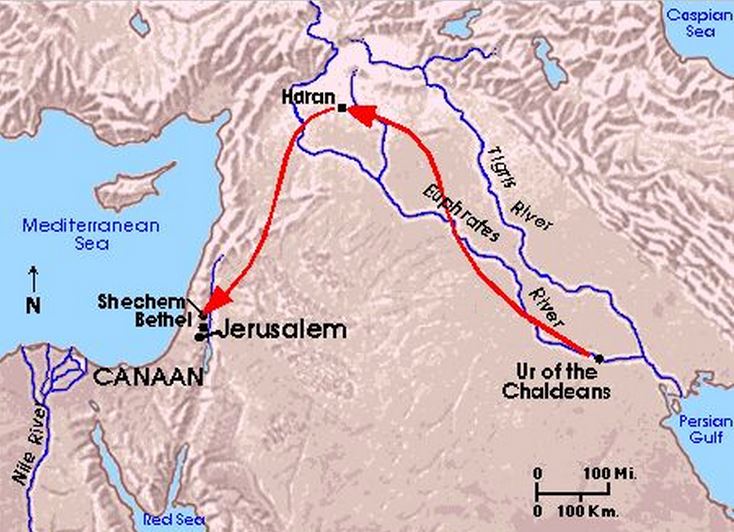 The other group, the Hebrew tribe, are those who migrated from Southern Mesopotamia and were led by Abraham (in Islam: Ibrahim). This means that there are two historical continuities: one that started in Egypt and the other in Mesopotamia.
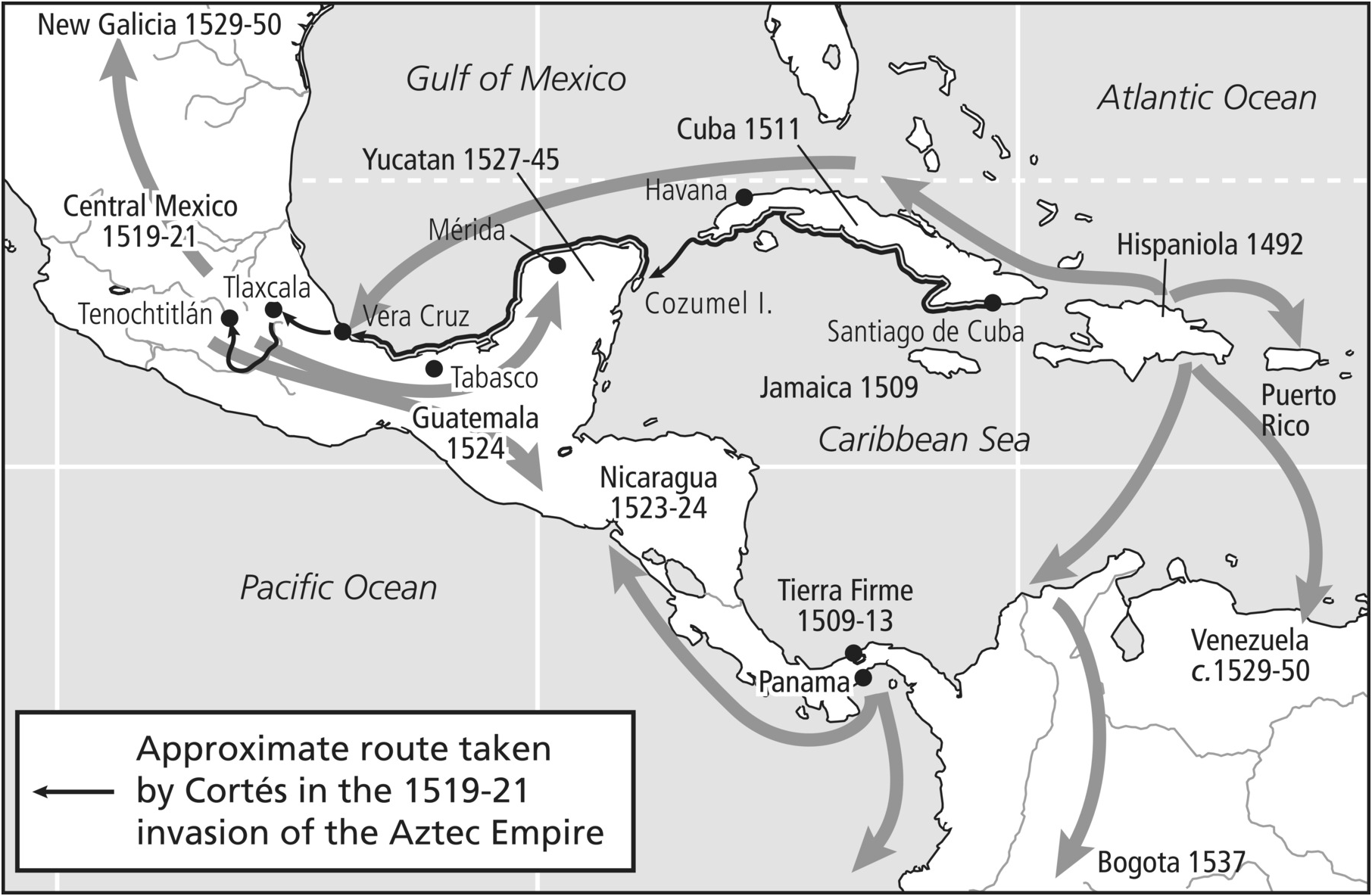 Anyone can learn to speak a language that is not native to the person because languages are once distributed into the world. The map on the right shows you how the Spanish language and the Catholic religion came to the Americas by Cortes' conquest.
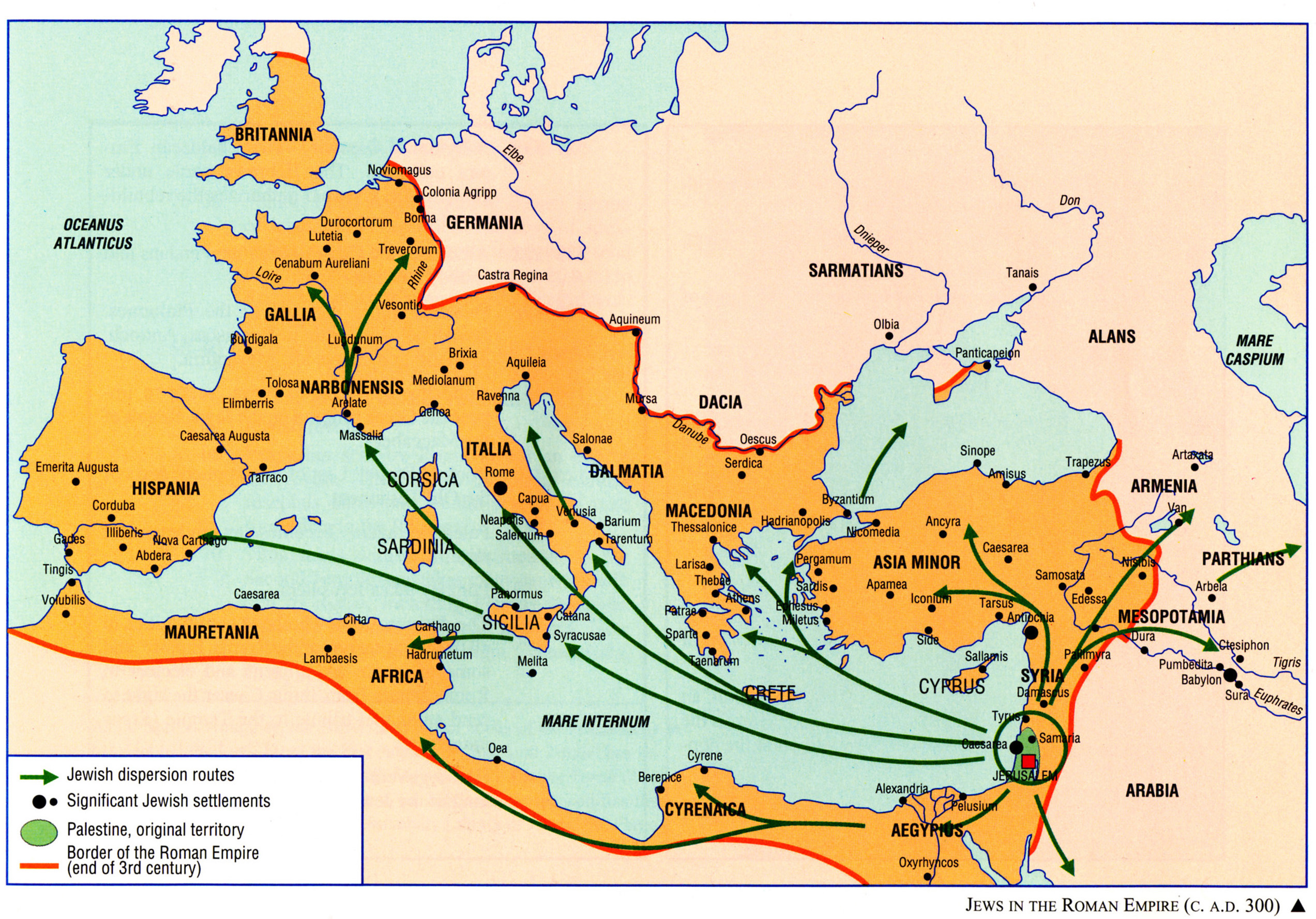 It is exact the same to the Hebrew language when it was first distributed across Southern Europe and from there into the rest of Europe. When Palestine became a Roman empire province, Jews who have fled also distributed their language, religion and culture. They are the first ancestors of all later ancestors of ancestors of today's Jews in Europe. This doesn't mean that today's Jews in Europe are Semitic people. They are not. Nor are they originated to Semitic people as their ancestries sprouted in Europe.
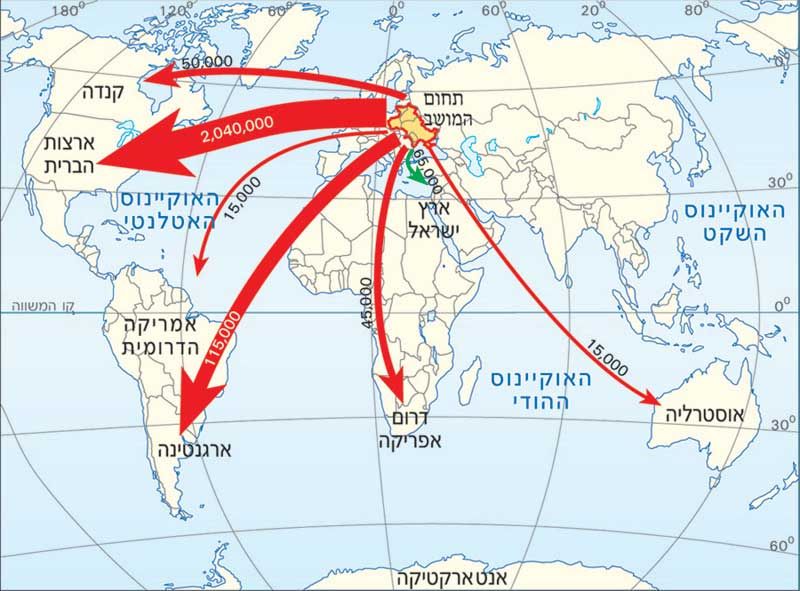 The map on the right isn't only showing the reason of a migration. It also shows the result of migration, namely the distribution of the Hebrew language, Jewish religion and culture between 1850 and 1914 and reminds us to the map of the Spanish with the difference that the map below is not about a conquest.