div align="center">
|
Important: this page is not about history but a view on a history.
3. CANAAN
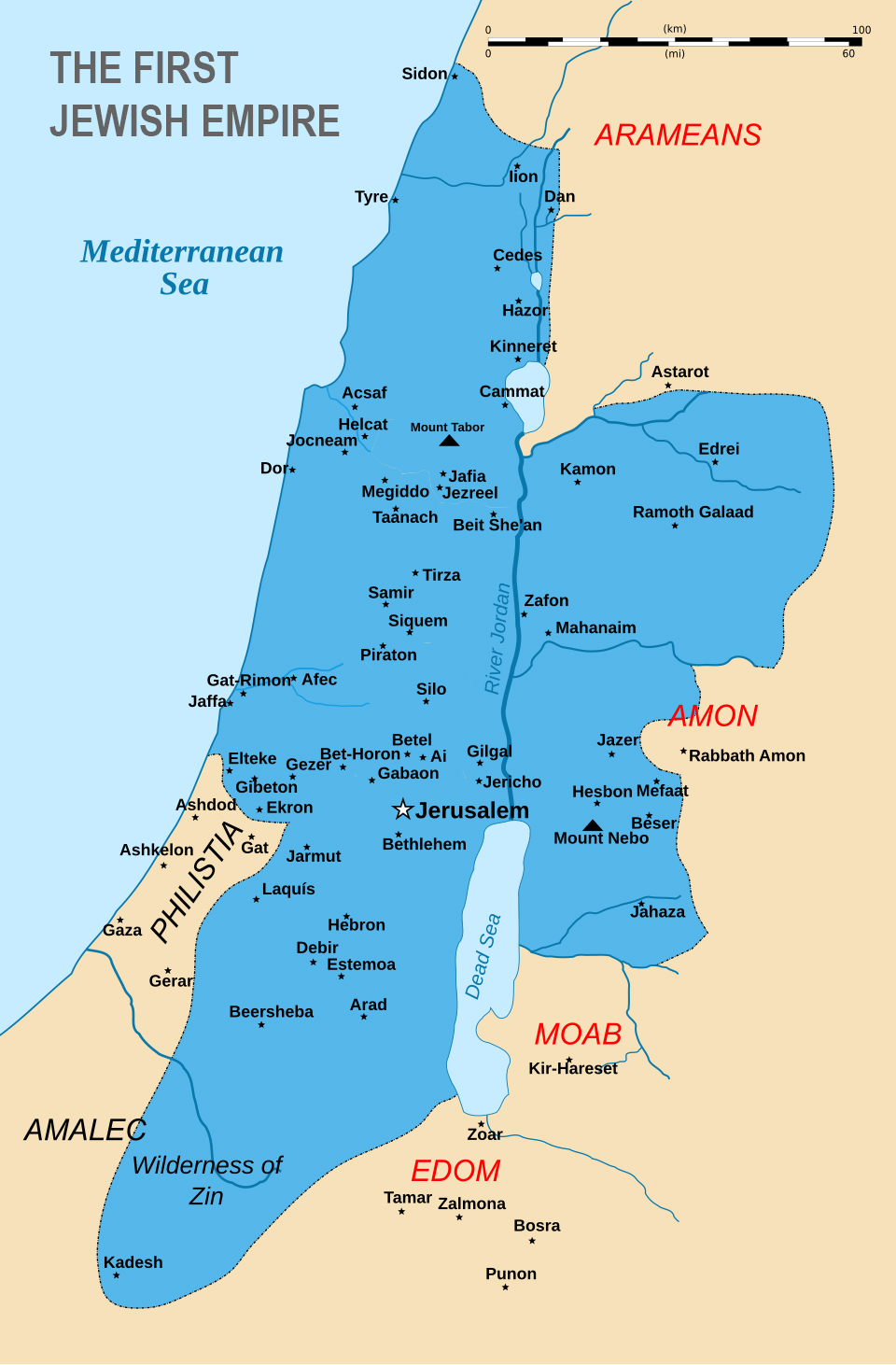
Canaan was a region encompassing several kingdoms. The name is said as from an ancient Semitic word, likely meaning "lowlands," from a root meaning "to be low, humble, or subdued," contrasting with "highlands" (Aram). It sometimes meant "merchant," referring to traders from the region, or even the precious purple dye they produced. The Kingdom of David did not exist when Moses and his Israelite people invaded the territory of the Amalekite to slaughter women, children and the animals the Amalekite were keeping, netiher existed when Joshua conquered Canaan. .If you search for information about the question "Which people lived in the Kingdom Of David?", you might find this: "The people who lived in the Kingdom of David were primarily the Hebrews or Israelites, comprising all twelve tribes of Israel, along with other local inhabitants such as the Jebusites and Canaanites." If "Hebrews or Israelites" refers to a same people, they were not, as the kingdom was inhabit by different tribes, including the Canaanites. The Hebrews were a tribe originally from Ur in Southern Mesopotamia, now Urfa in the Basra region of Iraq, These people, led by Abraham, needed to make a long journey before reaching Canaan, not the Kingdom of David, where they gather with other tribes to reach a covenant to accpet one god. The Israelites were a tribe led by Moses, who came from the Sinai desert to invade the territory of the Amalekite then ended up in the Kingdom of David for where they were driven into territory of the Jebusites. But, we keep seeing online information claiming that the Amalekite attacked the Israelites like Netanyahu claimed on November 4, 2023. The rabbi at the end of the video rebukes the claim. Online information also reads about '12 people of Canaan,' who are claimed as descendants of Jacob: Reuben, Simeon, Levi, Judah, Dan, Naphtali, Gad, Asher, Issachar, Zebulun, Joseph (represented by Ephraim & Manasseh), Benjamin. However, historical science and archaeology indicate that the biblical narrative of a unified, 12-tribe conquest of Canaan is unlikely to be historically accurate in the way it is previously portrayed. Instead, the prevailing scholarly consensus suggests the early tribal people were a population that emerged largely from the indigenous Canaanite inhabitants of the region. Canaan was home to various peoples, notably the "Seven Nations" mentioned in the Bible: Canaanites, Amorites, Hittites, Perizzites, Hivites, Girgashites, and Jebusites, alongside groups like the Anakites, Hamathites, and Arvadites, with Israelites later emerging from this diverse Canaanite population. These groups included powerful city-states and semi-nomadic herders, interacting with Egypt, Mesopotamia, and Anatolia, forming a rich cultural mosaic. The tribes:
In essence, Canaan was a crossroads of cultures, not a single ethnic entity, with many distinct groups sharing the land. Modern-day colonized historic Palestine is populated somehow similar. The Israelis are descendants from people of Central and Eastern Europe, and people from around the world. It is predominantly Jewish (Ashkenazi, Sephardi, Mizrahi ~74%), with a significant Muslim minority (~21%) but also Christians, Catholics (around 5%), and Baha'i. In terms of nationalities, Argentina, Australia, Belarus, Ethiopia, France, Germany, Hungary, Ireland, Netherlands, Poland, Romania, Russia, Ukraine, United States, Like Canaan, colonized historic Palestine, that most countries misleadingly call "Israel" is not a single ethnic entity.
|