|
Important:
this page is not about history but a view on a history.
5. SAMARIA
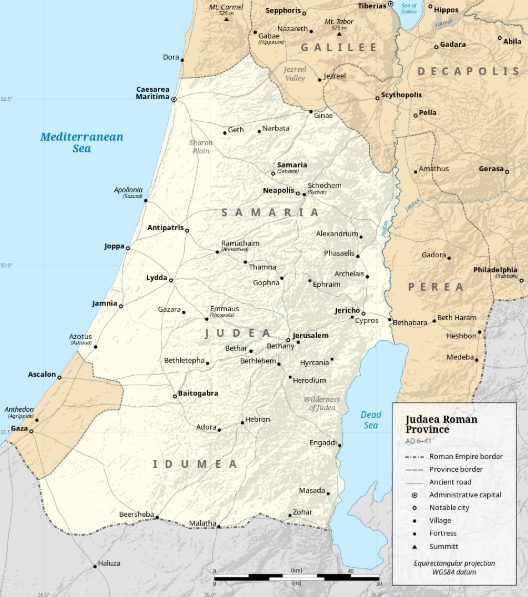
The united Kingdom of David split into two separate entities after the death of his son, King Solomon around 931 BCE due to a dispute over taxation and leadership. The northern tribes rejected Solomon's son, Rehoboam, and crowned Jeroboam as their own king, establishing their capital first at Shechem and later at Samaria.
Samaria refers to a historical region and its capital city in the central ancient region, situated between Judea and Galilee, known for its distinct people and biblical history, including being the capital of the Northern Kingdom before its Assyrian conquest and a key location in New Testament narratives like the story of the woman at the well. Today, the area corresponds to parts of the northern West Bank, with the ancient city ruins near modern-day Nablus (Sebaste).
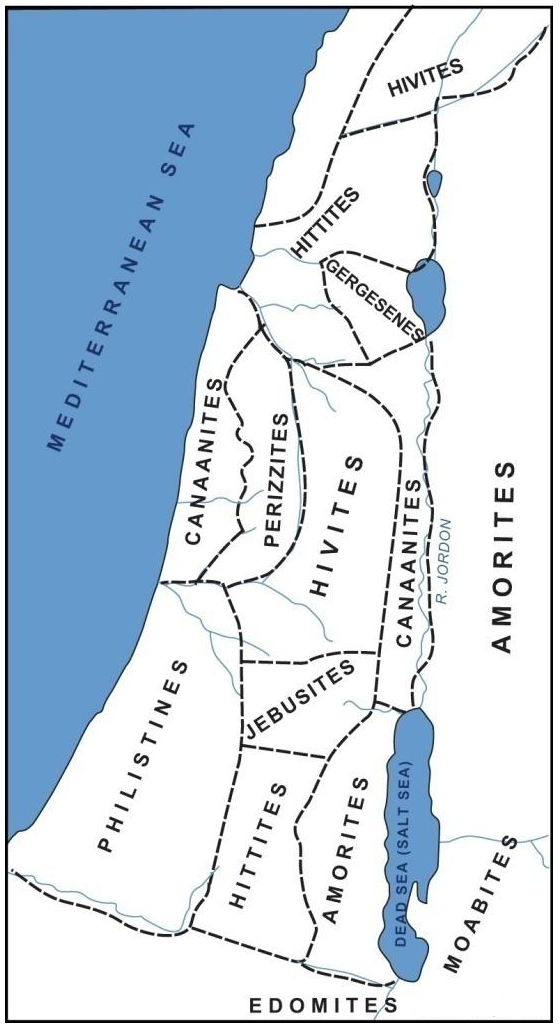
The Northern Kingdom has been described as having been populated by these peoples:
- Reuben refers to a tribe described as the firstborn son of Jacob and Leah, founder of the Tribe of Reuben, who settled in the lands east of the Jordan River, part of the Northern Kingdom; they were known for their strength but eventually lost prominence due to sins like defiling his father's concubine, eventually being exiled by Assyria and considered one of the Lost Tribes, though mentioned in prophecies. After the Israelites crossed the Jordan (Joshua's conquest of Canaan), the Reubenites settled in fertile lands east of the Dead Sea, bordering Ammon.
- Simeon refers to a tribe desrcibed as named after Jacob's 2nd son, , founder of one of Israel's twelve tribes, known for violent acts like avenging his sister Dinah with Levi, leading to Jacob scattering their inheritance; while initially south, the tribe diminished, with many joining Judah, and some members later aligning with the northern Kingdom of Israel or being absorbed, though historically linked to the southern area. The tribe of Simeon was meant to settle in the south, within Judah's territory, but faced decline and absorption, with members joining Judah or potentially moving north. Some descendants of Simeon eventually allied with the Northern Kingdom
- Dan refers to a tribe described as named after the 5th son of Jacob (Israel), born to Bilhah, Rachel's maidservant. His name means "judge," as Rachel felt God had judged her favorably by giving her a son. Initially, the tribe was allotted land near the Philistines but faced pressure, forcing them to migrate north. They conquered the city of Laish (or Leshem) and renamed it Dan, establishing it as their new northern stronghold,
-
 Naphtali refers to a tribe described as the 6th son of Jacob, second son of Bilhah, Rachel's maidservant, making him a half-brother to Dan, whose descendants formed one of the twelve tribes, inheriting fertile land in the north of Canaan, near the Sea of Galilee; the tribe was known for its swiftness and military strength, linked to Isaiah's prophecy of the Messiah's ministry in Galilee, where Jesus lived in Capernaum, fulfilling "the land of Zebulun and Naphtali". HIs name has been described as meaning "My wrestlings," from Rachel's declaration that she "wrestled" with her sister Leah and prevailed in having children. The tribe eventually lost its distinct identity as one of the Ten Lost Tribes after Assyrian conquests. Naphtali refers to a tribe described as the 6th son of Jacob, second son of Bilhah, Rachel's maidservant, making him a half-brother to Dan, whose descendants formed one of the twelve tribes, inheriting fertile land in the north of Canaan, near the Sea of Galilee; the tribe was known for its swiftness and military strength, linked to Isaiah's prophecy of the Messiah's ministry in Galilee, where Jesus lived in Capernaum, fulfilling "the land of Zebulun and Naphtali". HIs name has been described as meaning "My wrestlings," from Rachel's declaration that she "wrestled" with her sister Leah and prevailed in having children. The tribe eventually lost its distinct identity as one of the Ten Lost Tribes after Assyrian conquests.
- Gad refers to a tribe described as named after the 7th son of Jacob, born to Zilpah (Leah's handmaid), and the founder of the tribe, described as known for their martial prowess and pastoral life east of the Jordan, eventually becoming part of the Northern Kingdom before its fall to Assyria, where they were among the Ten Lost Tribes. They were fierce warriors who settled fertile lands for grazing and promised to help conquer Canaan before returning home, making a significant impact despite being descendants of a servan.
- Asher refers to a tribe named after the 8th son of Jacob and Zilpah (Leah's servant)., known for its prosperous, fertile territory in northwest Canaan, rich in oil, though it often remained apart from national affairs, eventually becoming one of the Lost Tribes after the Assyrian conques. The territory was part of the Northern Kingdom after the split from Judah.
- Issachar refers to a tribe described as named after Jacob's 9h son (fifth by Leah) and the founder of one of the twelve tribes, known in the Northern Kingdom for its wisdom, agricultural richness in the fertile Jezreel Valley, and strong leadership, with its members noted for understanding the times and serving as advisors, even providing kings like Baasha, despite Jacob's prophecy likening him to a strong but yielding donkey, according to pro-Israeli Wikipedia, JW.ORG, EGW Writings, and Bible Hub. His name is explained as "reward," reflecting Leah's view of him as payment for giving her maidservant to Jacob, according to the same mentioned sources.
- Zebulun refers to a tribe described as named after the 10th and yongest son of Jacob and Leah, fathering one of the twelve tribes, located in fertile northern Canaan, known for its maritime access and trade, contributing warriors to battles (like against Sisera), and later becoming part of the Northern Kingdom. Zebulun was dispersed after the Assyrian conquest of the Northern Kingdom in 721 BC
- Ephraim was a tribe decribed as named after Joseph's 2nd son, who became a leading force in the Northern Kingdom after the kingdom split from Judah; the kingdom was often called "Ephraim" because of its power and central location, but the tribe eventually faced spiritual decline and exile with the Assyrian conquest in 721 BC. Joseph named him Ephraim ("fruitful") because God had made him fruitful in Egypt, the land of his suffering. Grandfather Jacob adopted Ephraim and Manasseh, giving Ephraim the greater blessing, signifying his future prominence
- Manasseh refers to a tribe described as named after Joseph's elder son, was one of the twelve tribes, known for its significant land holdings both east and west of the Jordan River, forming a "half-tribe" in each area, and contributing leaders like Gideon, though later becoming one of the Ten Lost Tribes after Assyrian conquest. Their story highlights faith, division, and eventual assimilation, with parts remaining significant in both Transjordan and Canaan, bridging tribal unity and facing challenges.
- Manasseh described as a notorious, long-reigning, and wicked king of the Southern Kingdom son of the godly King Hezekiah, who reversed his father's religious reforms by promoting intense idolatry, child sacrifice, and pagan worship, leading Judah into great apostasy before his eventual repentance and return from Assyrian captivity, according to several pro-Israeli biblical sources, who also mentioned that "God allowed the Assyrians to capture him and take him to Babylon, but a biblical account in Chronicles describes his repentance and later attempts at reform after his return." He had the longest reign of any king in either kingdom (around 55 years).
The tribes and their habitats, as described above, are about personalities who have their names from their fathers, except for the Mansseh tribe whom name refers to the name of a ruler. None of them carry geographical names. For instance, the Jebusites were a tribe named after the hill Jebu, now Jerusalem. All infornation as provided are from what is called the 'Hebrew Bible,' while Jews either have the Torah or Talmuds.
HOW SAMARIA LOST ITS JUDAIC IDENTITY
ASSYRIAN RULE
The Assyrians invaded and captured Samaria, the capital of the Northern Kingdom between 724 and 721 BCE, culminating in a three-year siege that ended around 722/721 BCE under Sargon II, marking the fall of the kingdom. The siege began around 724 BCE, initiated by Assyrian King Shalmaneser V, and ended with the capture of the city after a lengthy siege (724-721 BCE), completed by Sargon II (Shalmaneser V's successor) in 722 or 721 BCE. The Assyrians captured King Hoshea, deported much of the Israelite population to other parts of the empire, and resettled Samaria with people from other conquered lands, effectively ending the northern Kingdom.
THE FIRST MUSLIM RULE
After the Babylonians conquered Judah (see map on the left) and exiled its people (around 586 BCE), the region came under the control of the Persian Empire, specifically King Cyrus the Great, who allowed the Jews to return home and rebuild their temple in 538 BCE, leading to the period of Persian rule before later conquests by the Greeks (Alexander the Great) and Hellenistic powers.
The Persians were an ancient Indo-Iranian people who settled the Iranian Plateau, forming powerful empires, most notably the Achaemenid Empire (c. 550–330 BCE), which became the largest empire of its time, stretching across vast parts of Asia, Africa, and Europe. United by the Persian (Farsi) language, they are known for their significant cultural, artistic, scientific, and political contributions, with modern Persians being the majority ethnic group in Iran, practicing Shia Islam, and a related community (Parsis) in India following Zoroastrianism.
HELLENISTIC RULE
Samaria was invaded by the Hellenists during the conquests of Alexander the Great around 332 BCE. Following a Samaritan revolt in which the Macedonian governor was killed, Alexander destroyed the city and re-established it as a Macedonian military colony. The city remained under Hellenistic control (initially Ptolemaic, then Seleucid) for nearly two centuries until its final conquest and destruction by the Jewish Hasmonean ruler John Hyrcanus around 110 BCE.
ROMAN ERA
The Hasmoneans invaded and captured the region of Samaria around 110 BCE, under the rule of the Hasmonean leader John Hyrcanus I. His forces first attacked the religious and urban centers of the Samaritan population. They razed the city of Shechem and destroyed the Samaritan temple on Mount Gerizim around 111–110 BCE. The Romans took over power from the Hasmonean dynasty and incorporated the region of Samaria into their sphere of influence in 63 BCE, after the Roman general Pompey the Great intervened in a Hasmonean civil war.
The Romans originally practiced a polytheistic religion focused on numerous gods (like Jupiter, Mars, Venus) and household spirits, emphasizing rituals for a good relationship (pax deorum) for state and family success, heavily influenced by the Greeks. This practical, ritualistic system evolved, incorporating foreign cults (like Isis, Mithras) and eventually, by the 4th century CE, transitioned under emperors like Theodosius to become officially Christian (Nicene Christianity), making it the state religion of the Roman Empire.
THE SECOND MUSLIM RULE
The first Muslim rule in Samaria began with the Rashidun Caliphate's conquest of the region around the 630s CE, following the Arab conquest of Byzantine Palestine, establishing an early Islamic presence that grew with later Umayyad, Abbasid, Fatimid, and eventually Mamluk and Ottoman rule.
See also Judea
|
